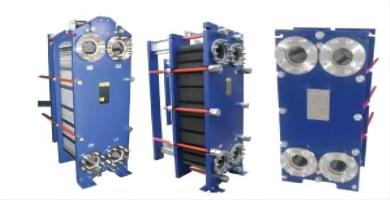
Removable Plate Heat Exchanger
Product Introduction
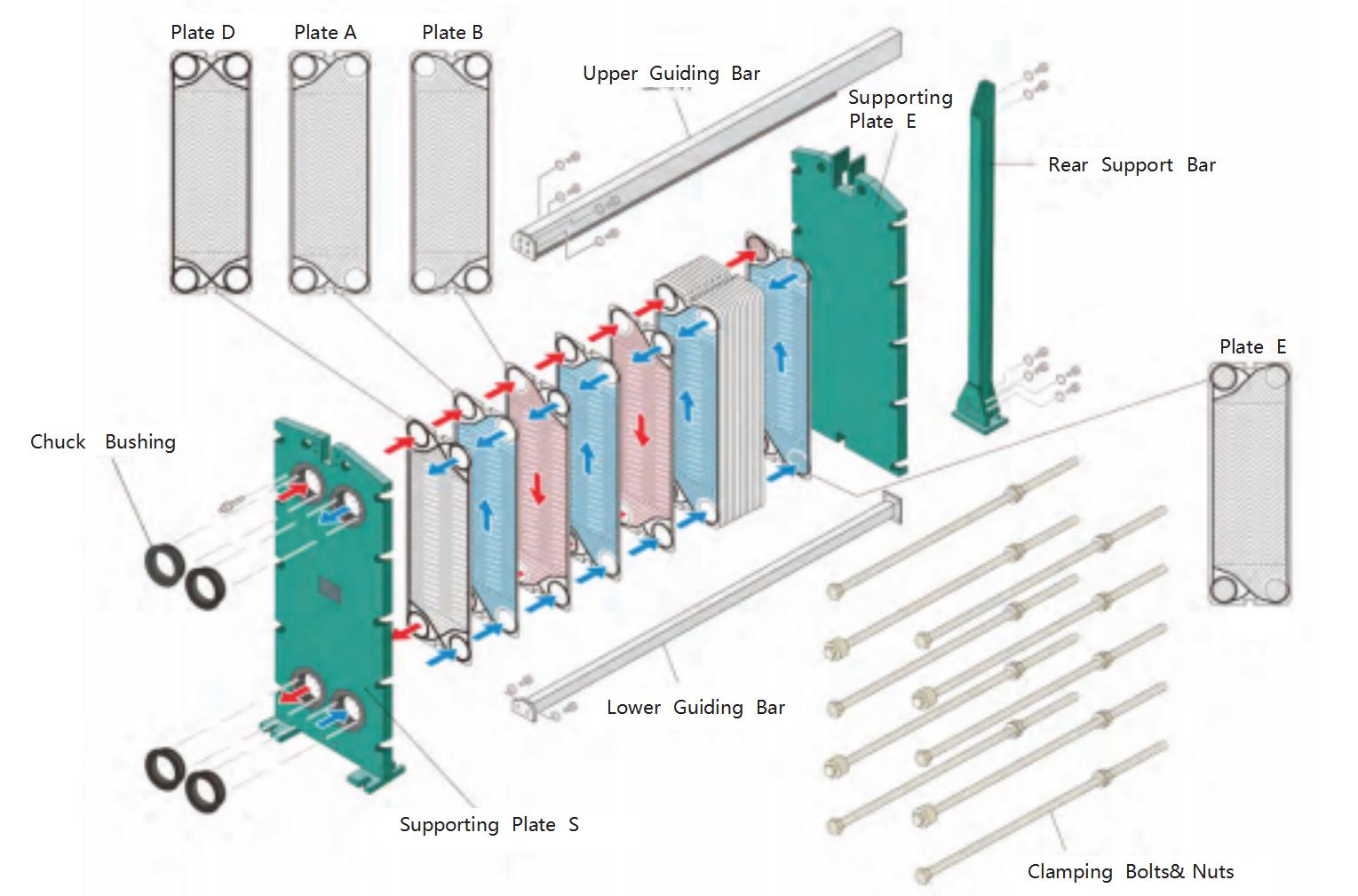
Plate Heat Exchanger is abbreviated as PHE , which is made by machine pressing metal plates into corrugated shape, then assembled&piled up, with the help of supporting plates and clamping bolts. In that, a compact and efficient Plate Heat Exchanger hence comes to life, featuring a neat structure in which multiple channels are formed and two fluids flow and exchange heat.
High Efficient, Energy Saving, Economic, Advanced are the advantages of Plate Heat Exchanger. Until now it has already entered the market of Petrochemical Engineering, Food and Beverage, Mechanical Engineering, Central Heating, Metallurgical Engineering, Power Unit System, Marine, Paper-making, Textile , Pharmaceutics, Nuclear industry, Seawater Desalination, Cogeneration, and there are so many others to be discovered.
Over the years,conventional Shell&Tube Heat Exchanger is giving way to this brand new Plate Heat Exchanger, and allows it to prove to the world its excellency in Cooling, Heating, Condensing, Heat Recovery and more.
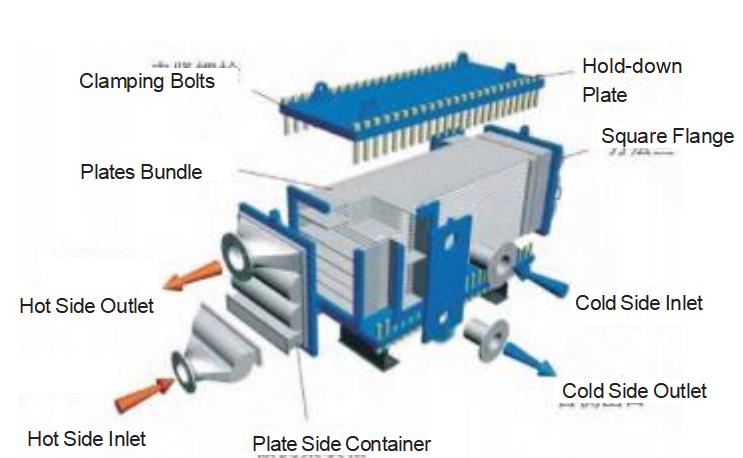
Plate Heat Exchanger Structure
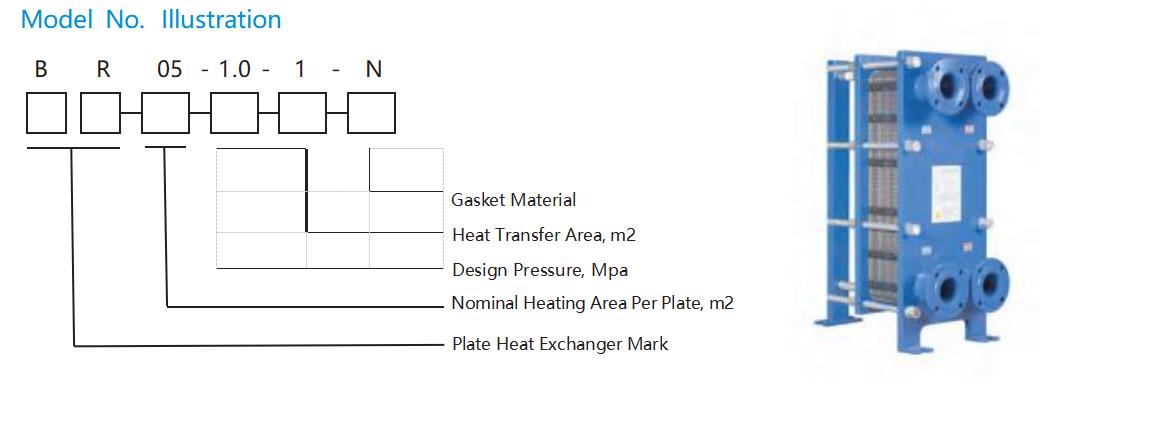
Model No. Illustration
Characteristics
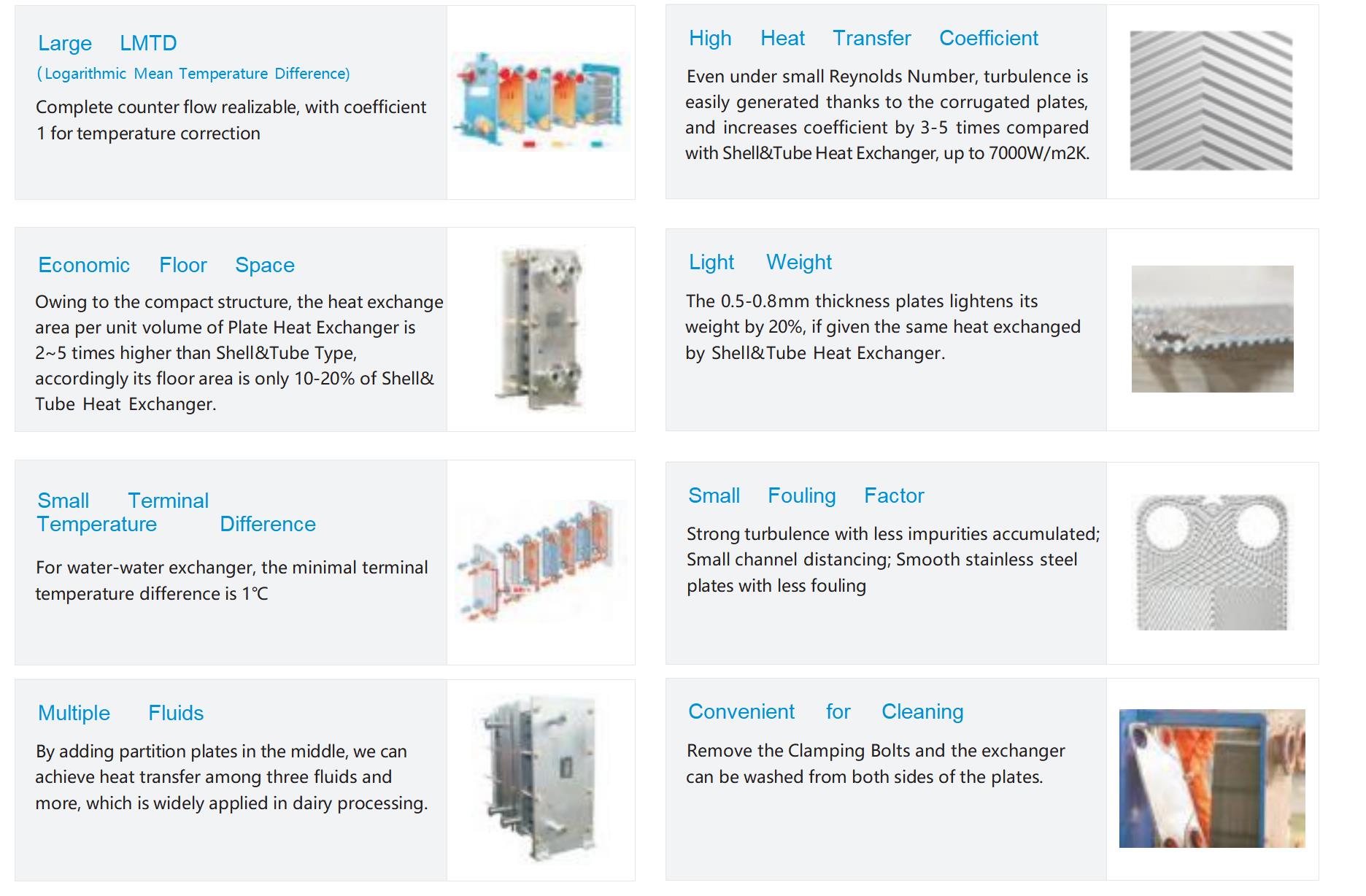
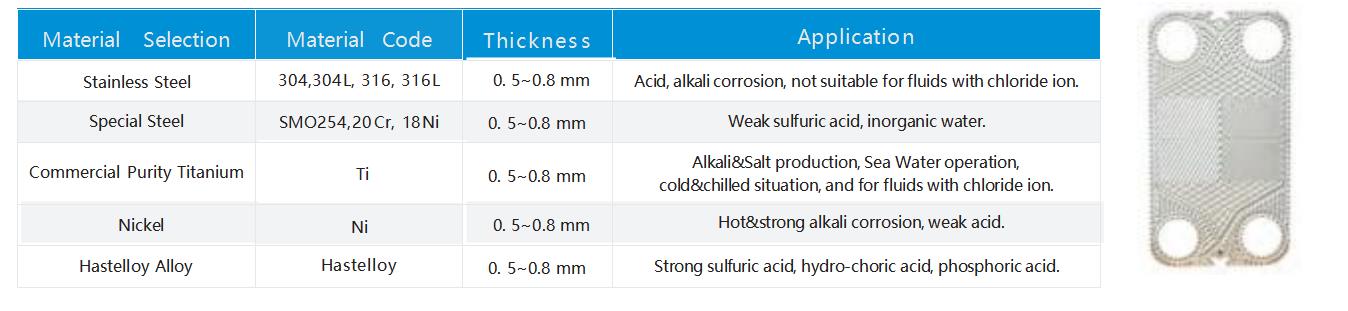
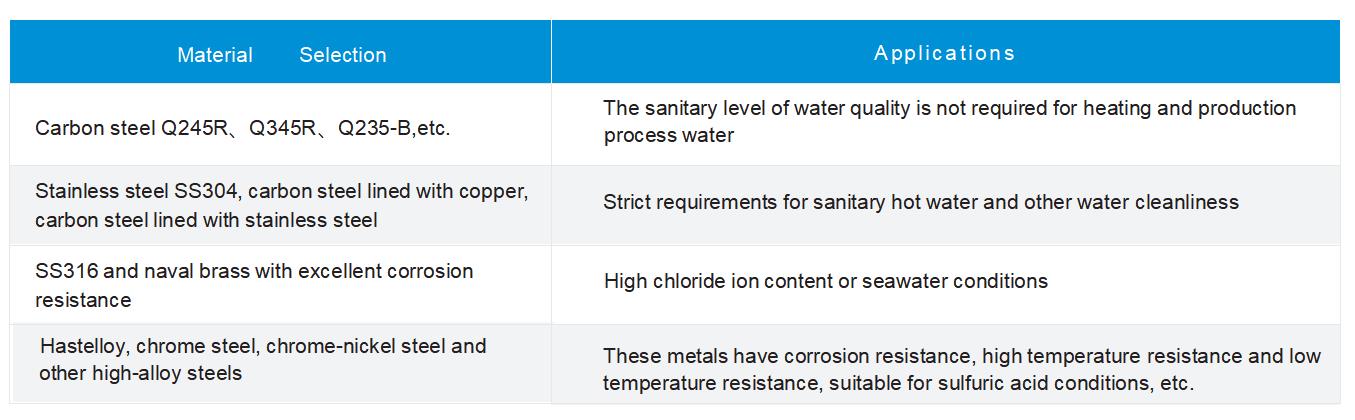
Plate Material
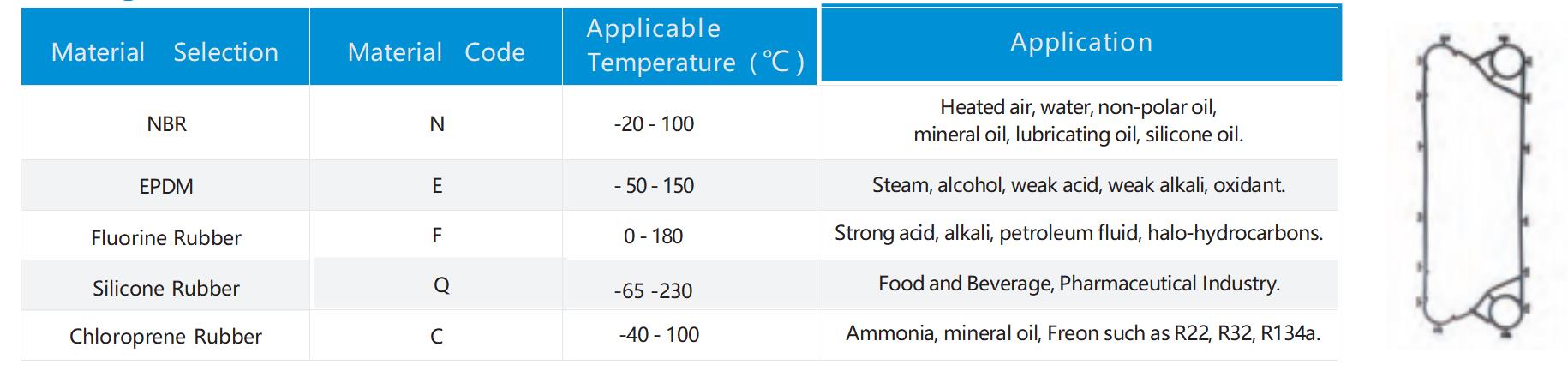
Sealing Gaskets Material
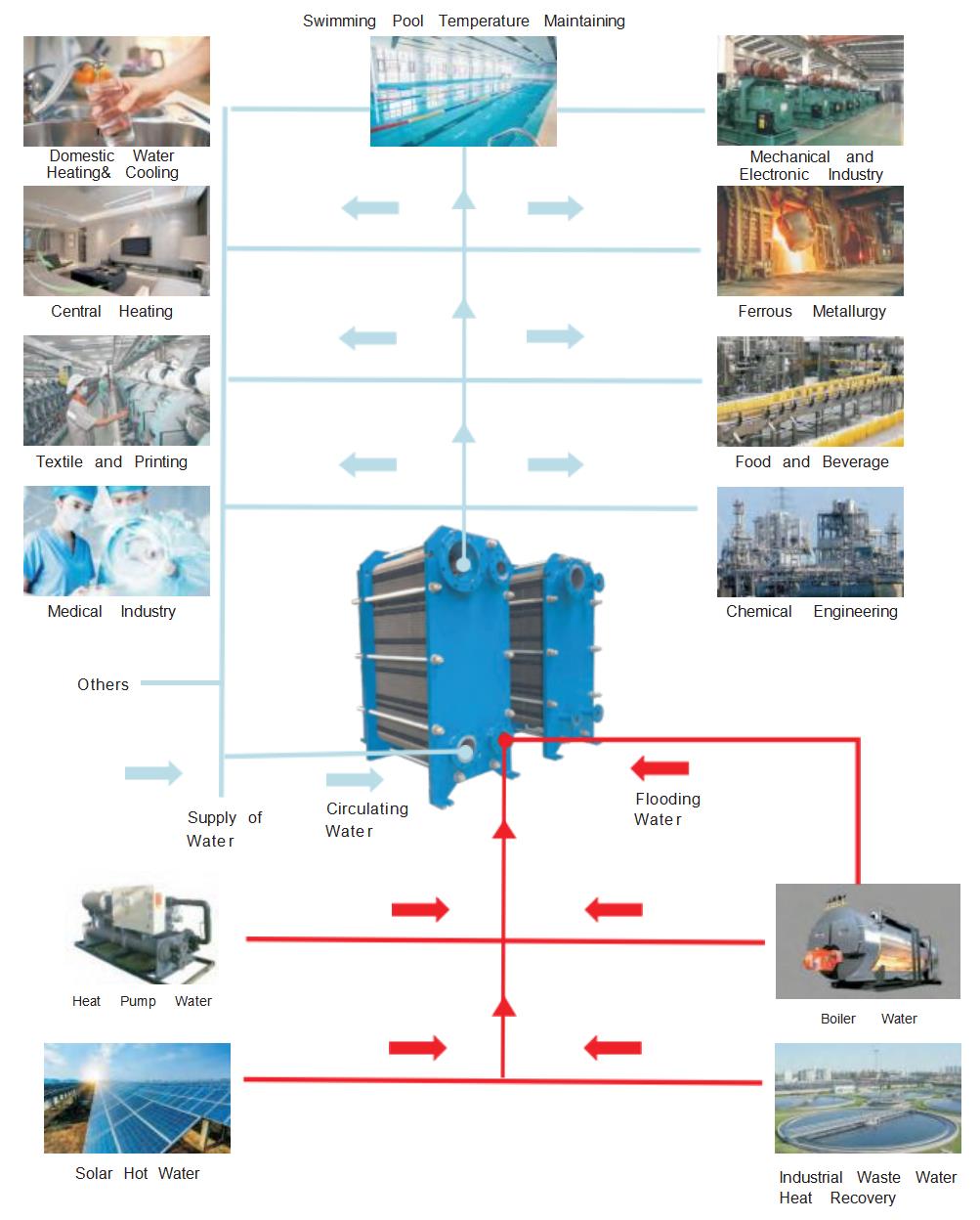
Application Overview
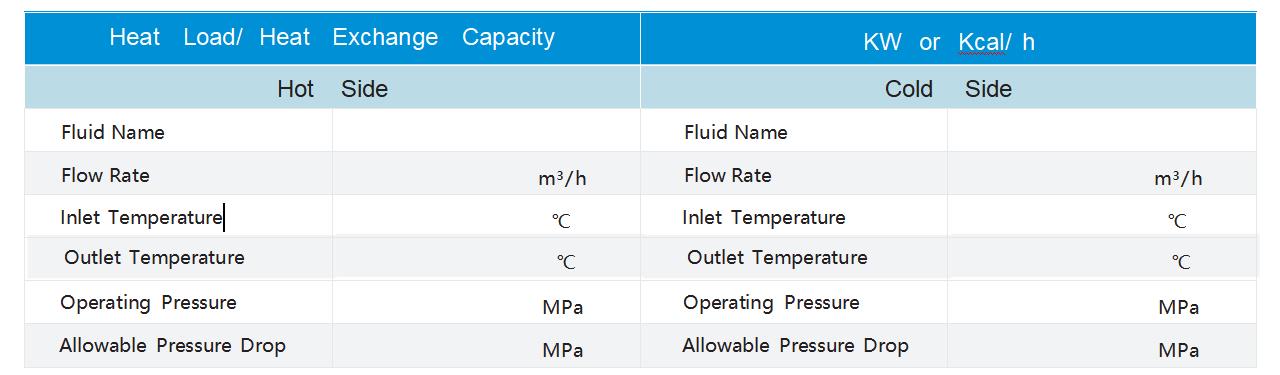
Model Selection with Parameters
Please provide the following as much as possible, it would be of great help to come up with a most fitting exchanger
Parameter Chart
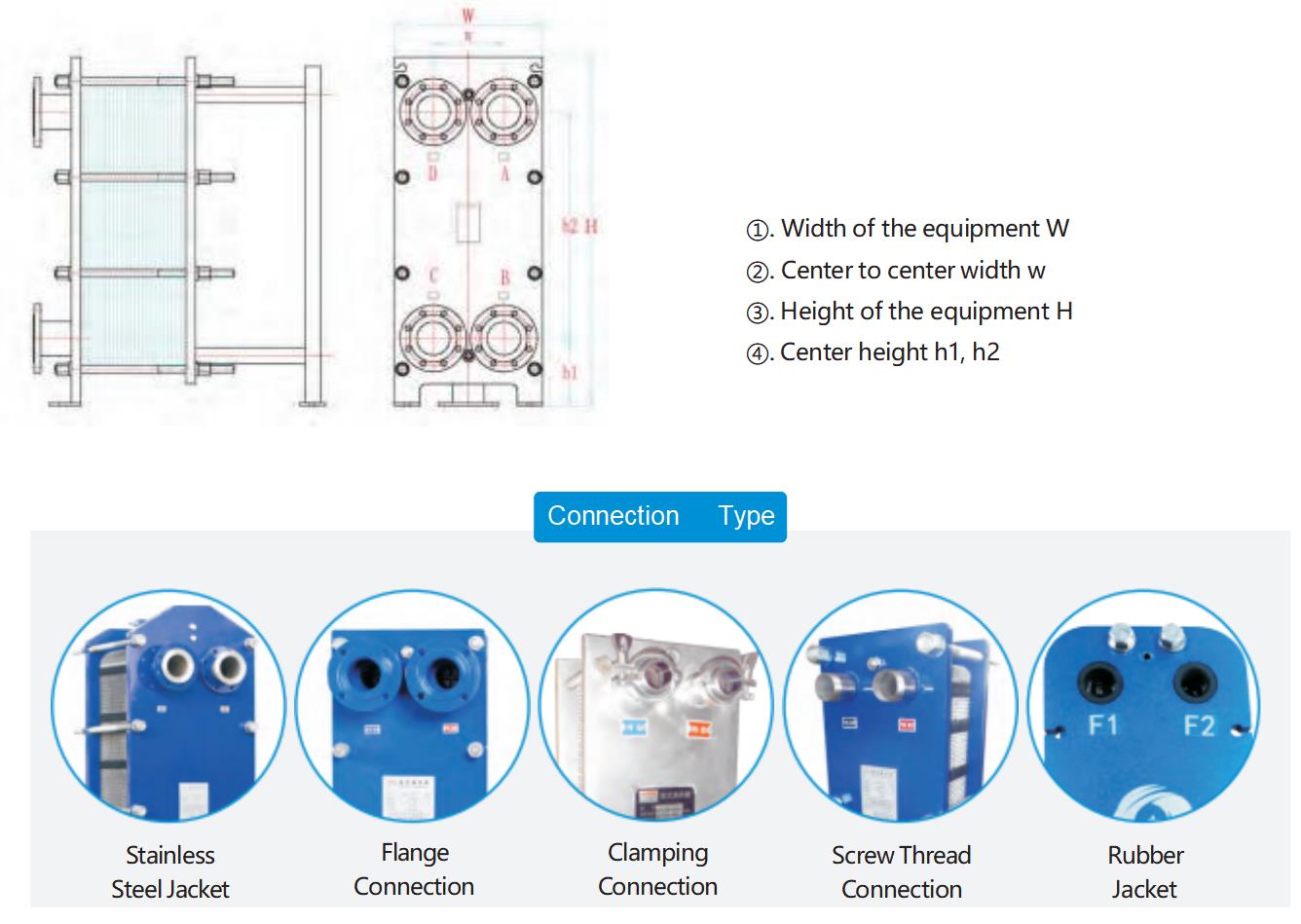
Model Selection Based on Existing Machinery
Please offer us with the mentioned dimension, for the convenience of our design&fabrication
Welded Plate Heat Exchanger
Product Introduction
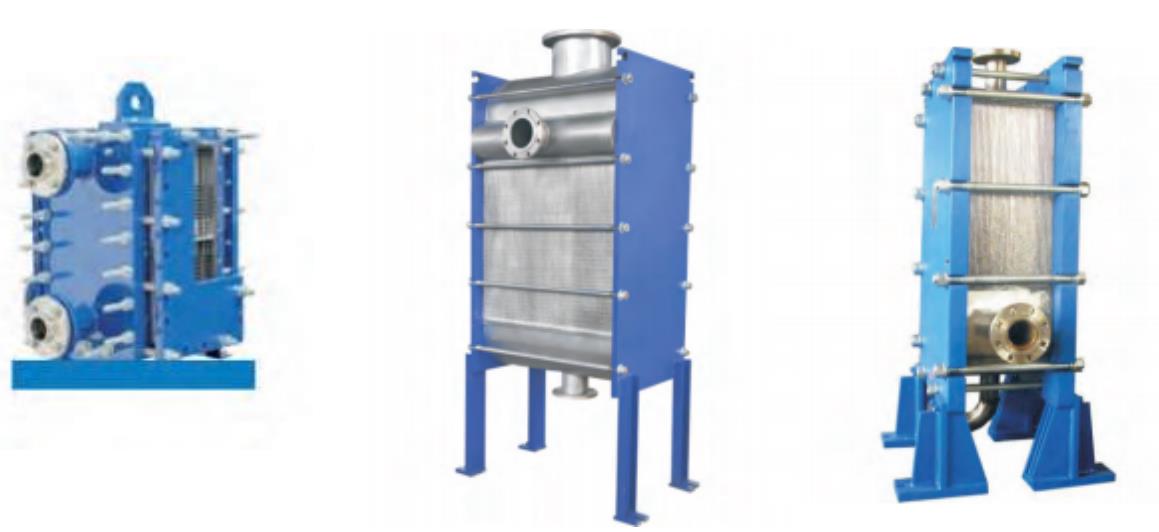
Welded Plate Heat Exchanger belongs to Recuperative Heat Exchanger, and is fully welded between every two plates to form channels through which the fluids with different temperature cans flow and exchange heat.
The high temperature fluid transfers heat to the low temperature fluid through the plates, thereby realize heat exchanging. The flow velocity of each fluid can be controlled by plates distance, so as to meet the working condition perfectly.
Model No. and Corresponding Specification
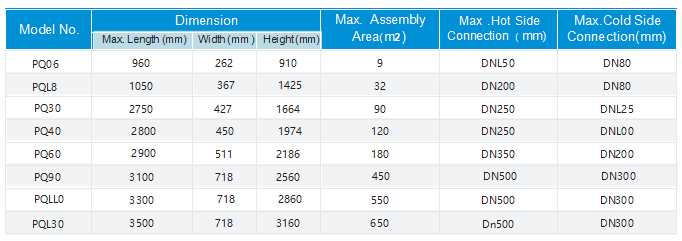
Design data
Flow Rate: 1-2000m3/h
Operating Pressure: Vacuum-8.2MPa
Operating temperature: - 195-300℃
Connection: DN25-DN300; Welded, Flange, Screw Thread and others
Anti-Corrosion: Fully welded without gaskets, but with a wide range of metal selections to ensure longer service life and strong corrosion resistance.
Advantages
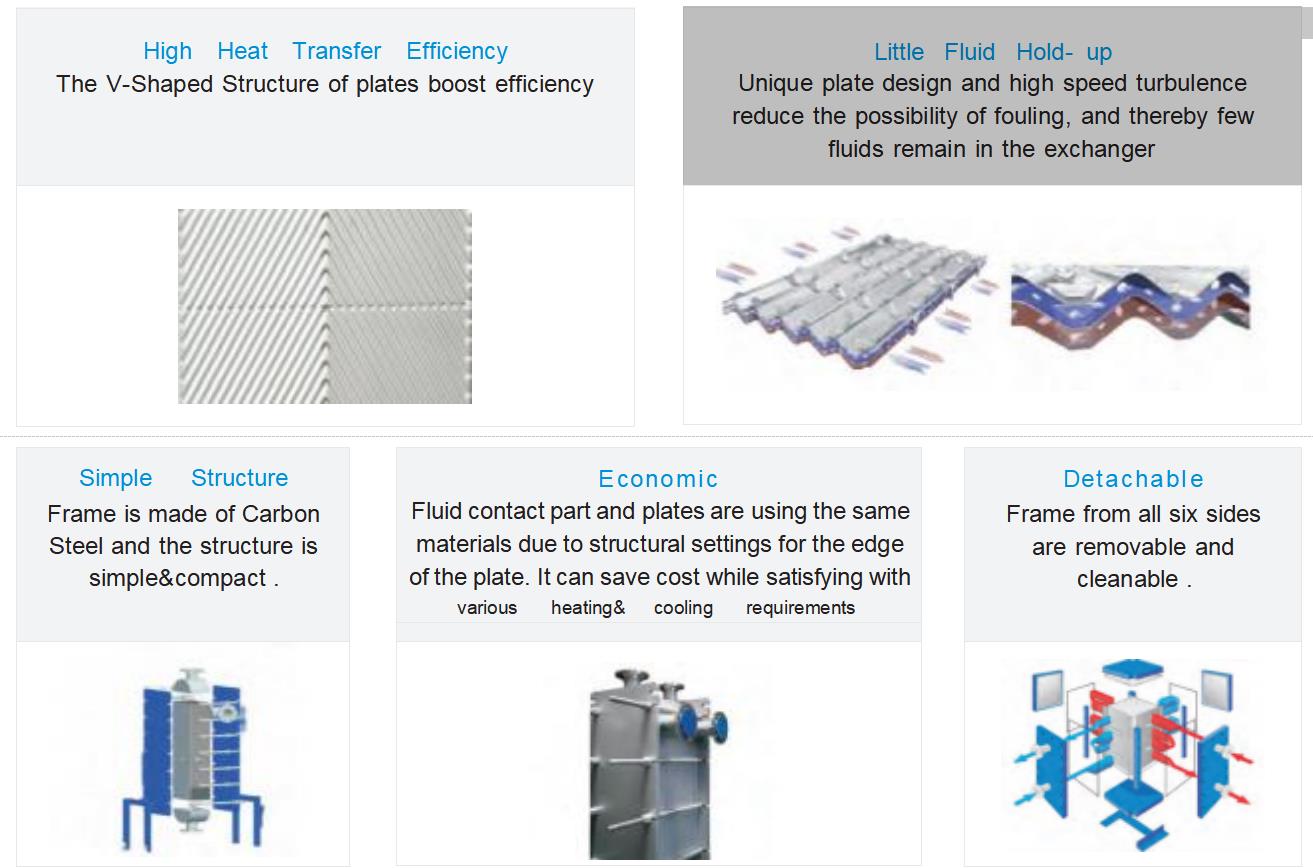
Welded Plate Heat Exchanger, combination of Plate Heat Exchanger and Shell&Tube Heat Exchanger, inherits advantages from the former such as compact structure, high temperature resistance, great sealing function, safety and reliability, and above all, it can perform under high pressure .
For application, Welded Plate Heat Exchanger is mainly for vapor condensing and liquid to liquid heat exchanging,
to meet with various requirements from industries like power sector, petrochemical, petroleum coking, pharmacy, metallurgy, refrigeration, paper processing etc. Optimal arrangement of various channels also make sure of high heat transfer efficiency and minimal pressure loss. Besides, its frame is detachable, and therefore it is convenient to have either mechanical cleaning or chemical cleaning as per actual situations.
Characteristics
Shell and Tube Heat Exchanger
Product Introduction
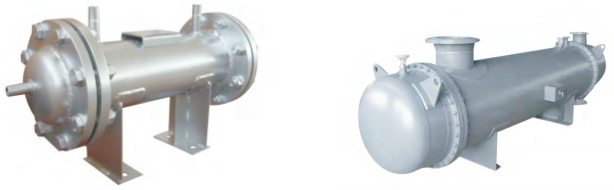
Shell and tube heat exchanger, also called tube-and-tube heat exchanger, is a partition type heat exchanger with the wall surface of the tube bundle enclosed in the shell as the heat transfer surface. This kind of heat exchanger has simple structure and reliable operation. It can be made of various materials (mainly metal materials, like carbon steel、 stainless steel and copper) and can be used under high temperature and high pressure. It is widely used in the chemical, oil, energy and other industries.
Features
Large processing quantity (1-2,000m³/h)
Extensive material selection (carbon steel, stainless steel, copper or other metals)
Stable and reliable operating state
Strong adaptability (applicable to almost all industries)
Adaptability to high temperature and pressure (≤800°C; ≤6.0Mpa)
Fixed tube heat exchanger
Product Structure
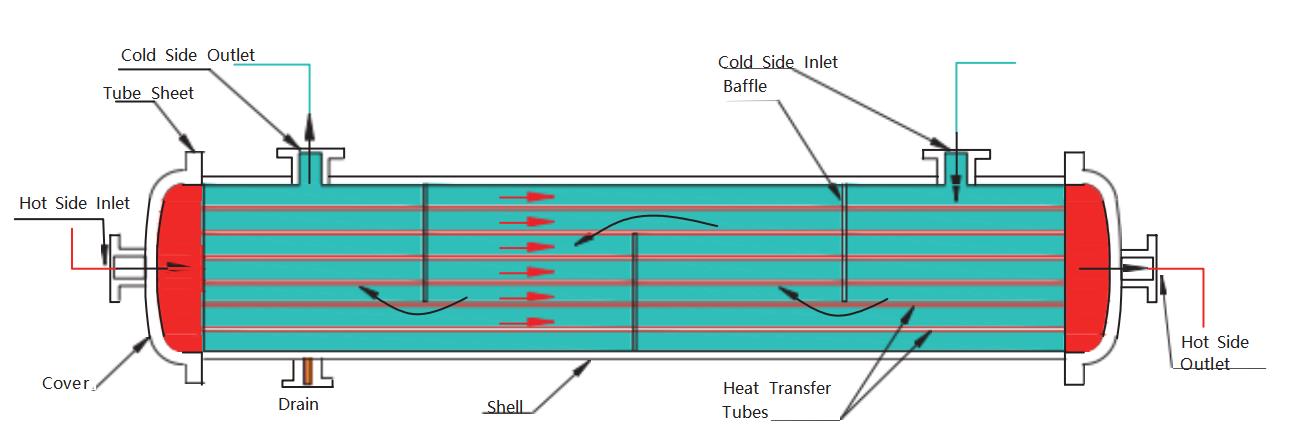
Applicable Occasions
The tube sheet at both ends of the tube bundle and the shell are integrated, only suitable for the small fluid temperature difference in both the tube and shell sides (less than 70 ℃), and the shell side does not require mechanical cleaning ; can also be used for a slightly large temperature difference and the shell side pressure is not high (less than 6Atm).
Features
Advantages: simple and compact structure, high pressure resistance, low cost and easy to clean the tube side. Disadvantages: Risk of blockage when the tube is damaged or needs to be replaced.
When the difference between the wall temperature of the tube bundle and the shell or the coefficient of linear expansion of the material is large, a large thermal stress will be generated in the shell and the tube bundle. A flexible compensation ring (also called expansion joint) should be installed on the shell to reduce the thermal stress.
U Tube Heat Exchanger
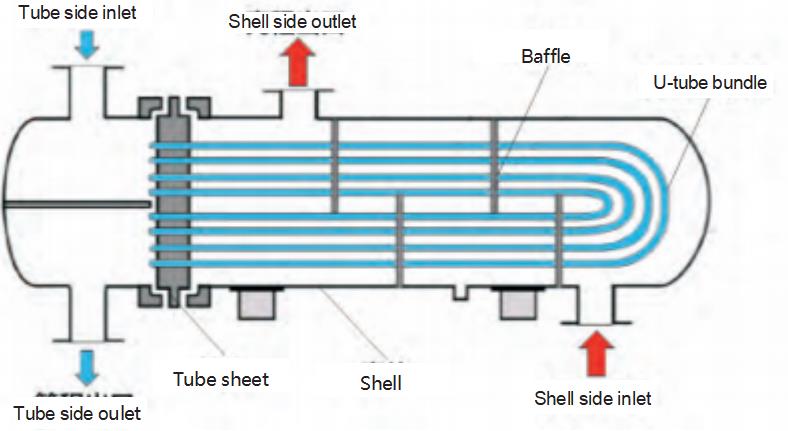
U tube heat exchanger is suitable for the large temperature difference between tube side and shell side. The shell side media is easy to scale and needs cleaning, while the tube side media is clean and not easy to scale. It is also suitable for high temperature, high pressure, fluid corrosive working conditions.
Shell and tube heat Exchanger
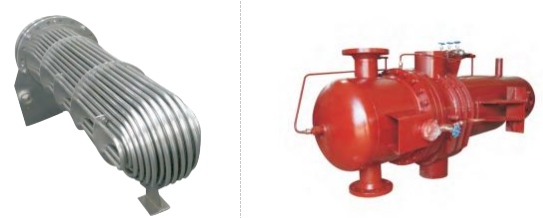
Each heat exchange tube is bent into U-shape, the two ends are fixed in the upper and lower areas of the same tube
sheet, and divided into two chambers of inlet and outlet with the partition in the tube box.
This kind of heat exchanger completely eliminates the thermal stress, the structure is simpler than the floating type, but the tube side is not easy to clean.
The number of tubes is small, the utilization of the tube sheet is not frequent, and the shell side fluid is easy to short
circuiting, which is unfavorable to heat transfer.
If there is a leak or damage in the tube, the external U-tube can be replaced, while the broken inner tube can not be
replaced, only plugged, and one broken U-tube means two broken, so the U-tube easily scrapped.
Floating Head Heat Exchanger
Application Occasions
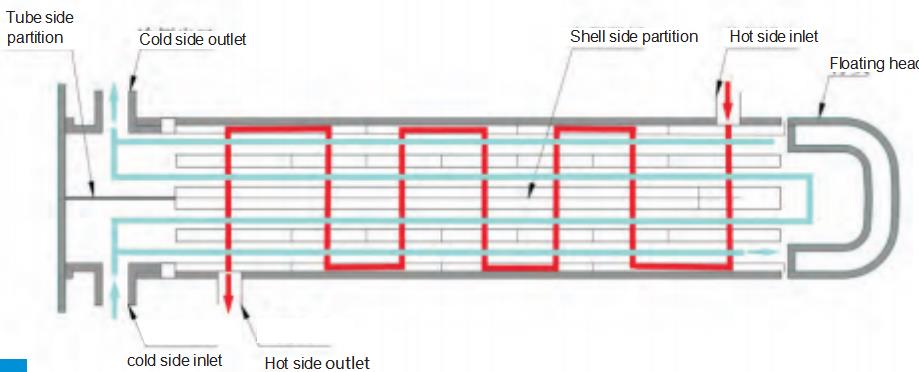
Floated type shell&tube heat exchanger is mostly used for large temperature fluctuations and temperature differences, compared with fixed tube heat exchanger, its structure is more complex and more expensive.
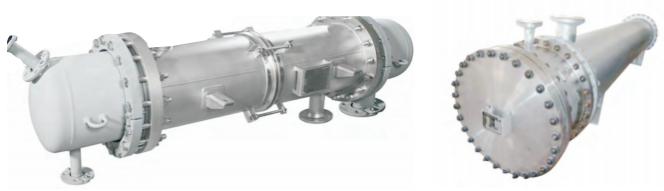
One end of the tube is fixed on an immobile tube sheet, which is clamped between the shell flange and the tube flange, and is connected by bolts; the other end of the tube is fixed on a floating head tube sheet, which is clamped between the floating cover and the hook ring connected by studs, forming a floating head that can move freely in the shell.
Strengths :
1. If the tube bundle and the shell are heated and elongated, they do not affect each other, so there is no temperature difference stress.
2.The floating part is a detachable connection consisting of the floating tube sheet, hook ring and floating cover. It is easier to take the tube bundle out, and the tube can be cleaned both inside and outside and is easy access.
Volume Heat Exchanger
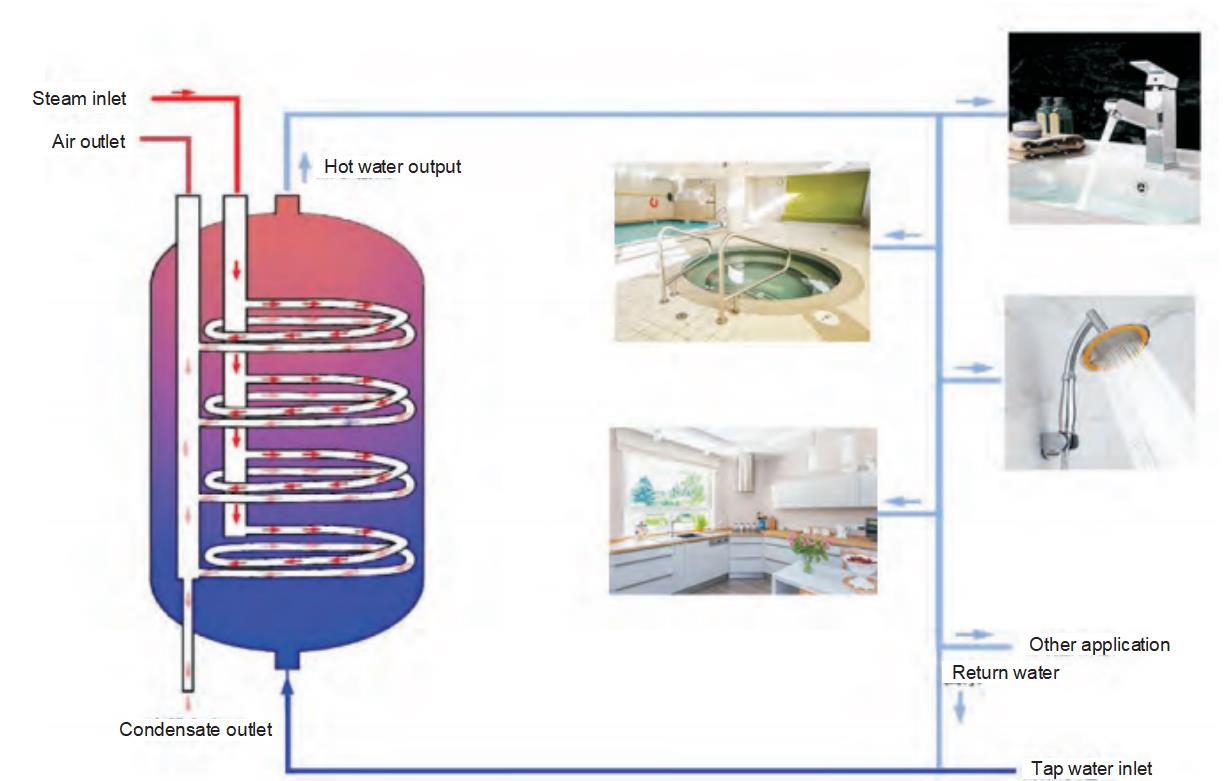
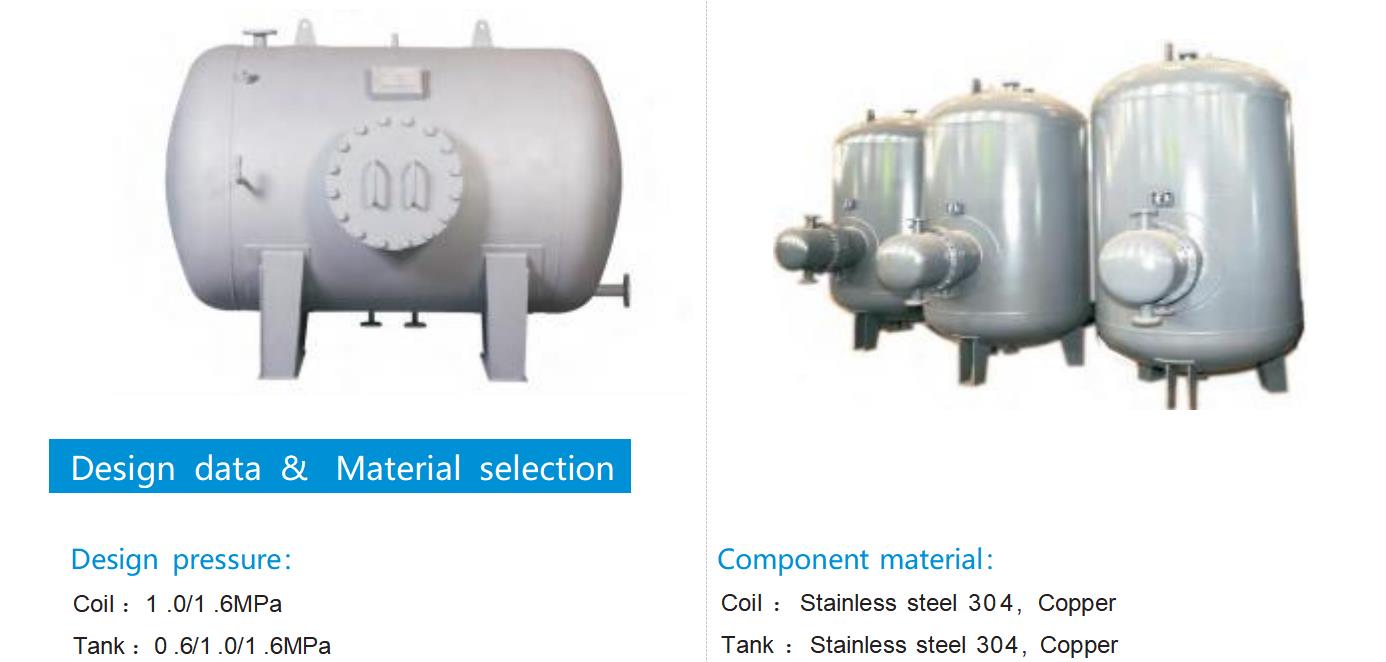
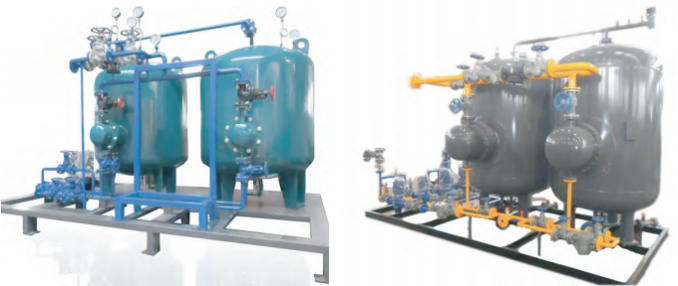
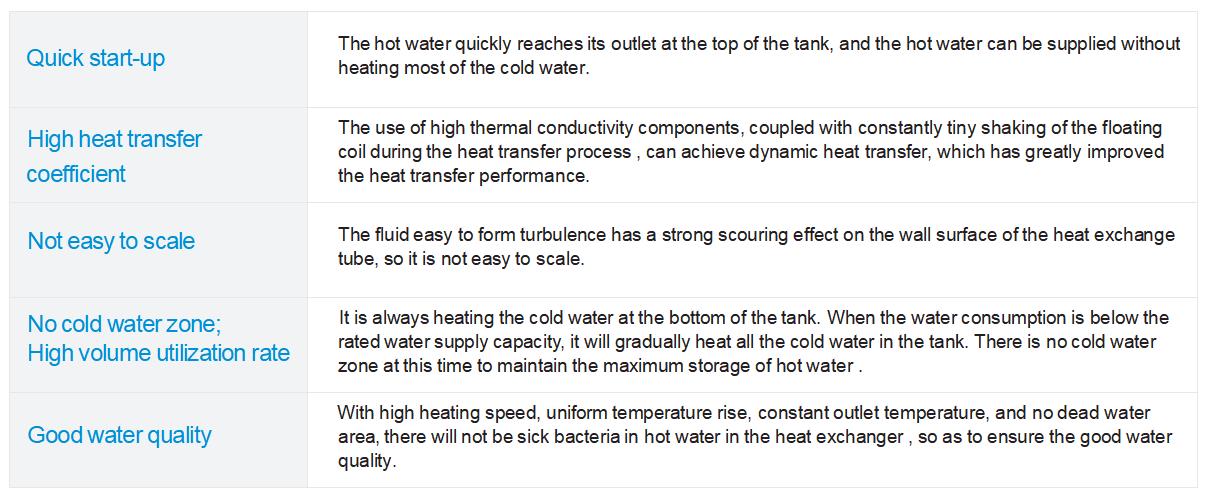
Volumetric heat exchanger adopts efficient heat exchange components - floating coil, for heating water in the tank layer by layer and the outlet can reach the set temperature, for the output of domestic hot water. The volumetric heat exchanger with floating coil is a new type of hot water equipment.
Application
It’s widely used in the sanitary hot water system of schools, hospitals and hotels.
Features
Application